A heavy-lift UAV does not have one fixed operating condition. Its mass, centre of gravity and power demand can change with the payload, and a delivery can leave it flying home in a substantially different configuration. The avionics specification should describe that range of conditions from the start.
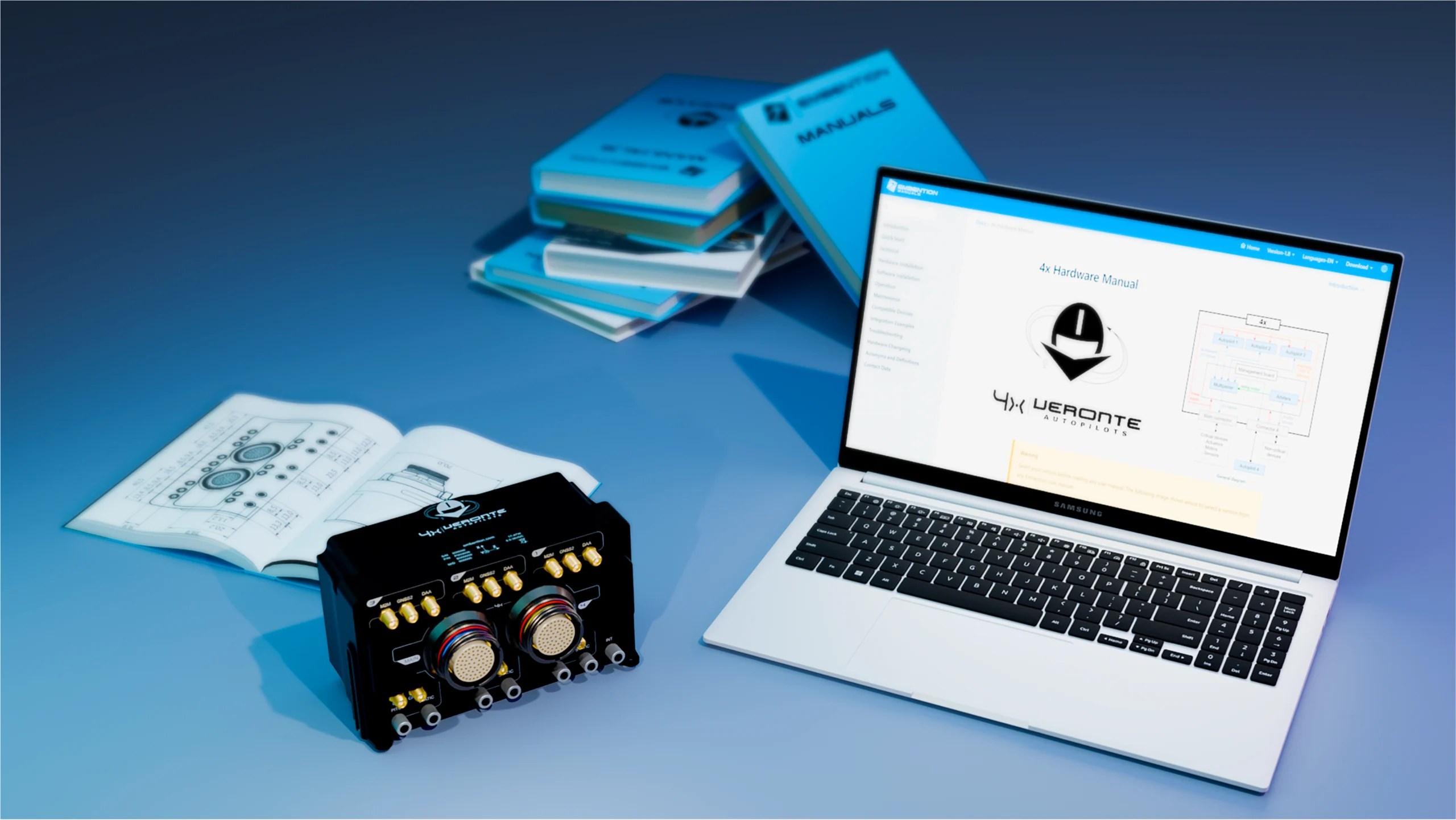
Embention’s Veronte 1x, 4x and DRx architectures offer different ways to implement vehicle control. Choosing among them requires a clear account of the mission, common dependencies and the functions that must remain available after defined faults.
Describe the payload as a changing part of the aircraft
State the empty and loaded mass, permissible centre-of-gravity range, payload attachment and any release mechanism. If the load can move or swing, identify that behaviour as part of the control problem rather than treating the payload as a static number.
An illustrative logistics aircraft may leave with its highest mass and return with a much lighter configuration. The take-off, transition or hover conditions at departure can therefore differ from those during recovery. Control settings and acceptance evidence need to address the relevant envelope, not just one demonstration load.
Also identify payload electrical demand. A powered cargo mechanism or sensor package may share an energy source with equipment needed for flight, creating a dependency that should appear in the architecture review.
Follow the fault through the complete control chain
A redundant controller cannot compensate for every shared component downstream. Trace the path from sensor information through computation, communications, actuator command and power supply to the mechanism that produces force.
The reviewed Veronte 4x documentation describes three internal autopilot cores, with an optional external fourth core. DRx distributes control hardware. These features can support an architecture’s redundancy objectives, but the installed system must establish the intended independence and fault response.
For example, distributing controller units does not remove a single shared actuator power supply. Conversely, adding independent power feeds does not address a mechanical release mechanism that can obstruct a control surface. The useful comparison is made against the same failure list for each proposed architecture.
Match the evidence to the operational consequence
Define what must happen after each relevant failure: continued controlled operation, a restricted mode or an acceptable recovery action. State how long that function must remain available and what information the operator receives.
Manufacturer references to development standards and environmental qualification are inputs to this assessment. They do not establish approval of the complete heavy-lift aircraft or its intended operation. Request evidence applicable to the exact hardware, software and configuration being considered.
Simulation and controlled testing should include the important payload states and transitions. Keep the mass properties and model assumptions with the results so that a later cargo change can be assessed intelligently.
UK Supply & Technical Enquiries
Torquety represents Embention in the United Kingdom and imports, distributes and sells its avionics hardware. Share the payload envelope, propulsion layout, power distribution, actuator interfaces, mission and assurance requirements.
Ask Torquety to assess a Veronte architecture for your heavy-lift platform. A useful proposal identifies the control arrangement, supporting equipment and manufacturer integration work needed to support the aircraft across its intended load cases, with the remaining system-level responsibilities made clear.