An uncrewed helicopter gives its control system a distinctive job. Rotor vibration, mechanically coupled controls and changes in loading all reach the avionics through the airframe. Selecting a flight controller is therefore only the beginning; the installation and control configuration determine whether it receives useful measurements and commands the aircraft correctly.
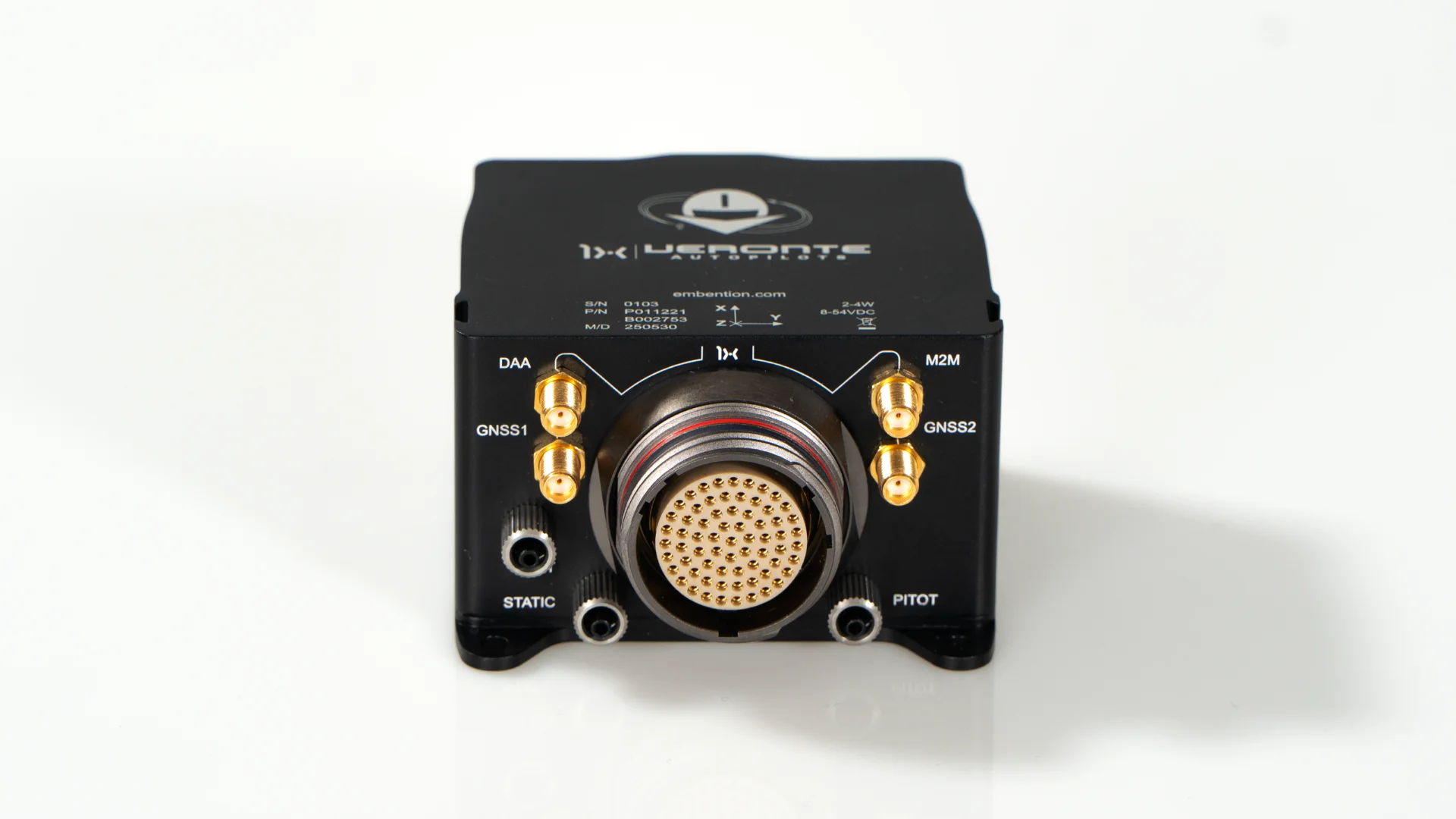
Veronte Autopilot 1x supports helicopter applications within its configurable vehicle-control capabilities. A sound integration brief describes the rotorcraft itself, including the mechanisms and interfaces that distinguish it from a multirotor.
Explain the control mechanism before assigning outputs
Document the swashplate arrangement, servo geometry, collective and cyclic functions, tail control and propulsion or governor interface. The number of available outputs is only one part of the question. The control mapping must reflect how individual actuator movements combine into the required aircraft response.
Provide actuator command ranges, update requirements and available feedback. Identify mechanical limits and the intended behaviour during start-up and loss of a command source. A direction error that is obvious on an isolated servo can become less obvious when several actuators contribute to one swashplate movement.
Use controlled, non-flight checks to establish that the configured commands match the mechanism before evaluating aircraft behaviour. The procedure and acceptance criteria should come from the integration programme.
Give the inertial sensors a workable installation
The Veronte 1x hardware manual discusses vibration isolation and notes that wiring can transmit vibration into the autopilot. A carefully selected mount can be undermined by a taut harness that creates an unintended mechanical path.
Assess the installed assembly, including bracket stiffness, mounting orientation, harness support and nearby vibrating equipment. More compliant mounting is not automatically better: the isolation arrangement must suit the aircraft’s vibration environment and preserve an interpretable sensor installation.
The reviewed manual also requires the autopilot’s position and orientation relative to the aircraft to be configured. Keeping that information in the installation drawing helps prevent a later maintenance change from quietly altering the navigation assumptions.
Keep magnetic and air-data problems separate
The 1x manual advises avoiding significant electromagnetic interference when using the internal magnetometer, with an external magnetometer recommended where the installation cannot provide a suitable location. Motors, high-current wiring and power electronics deserve attention even if the autopilot fits neatly beside them.
Air-data connections have their own installation requirements. Pressure intake position, tubing routes and the surrounding flow can affect what the sensor measures. A helicopter’s local flow environment should not be treated as equivalent to a conventional fixed-wing installation.
These are different mechanisms of error. Filtering or control tuning should not become a substitute for identifying a poor physical measurement.
Purchase an integration baseline you can reproduce
Retain the mechanical installation, sensor locations, actuator mapping, firmware and control configuration together. This makes a flight-test result meaningful and supports later changes to payload, rotor system or propulsion.
UK Supply & Technical Enquiries
Torquety represents Embention in the United Kingdom and imports, distributes and sells its avionics hardware. For a helicopter enquiry, provide the rotorcraft layout, servo and governor interfaces, vibration information, sensor plan and intended operating modes. Discuss uncrewed-helicopter avionics with Torquety so the proposed controller and manufacturer support address the mechanics of your aircraft, rather than a generic list of I/O channels.