A survey aircraft can fly every planned line and still return an unusable dataset. Missing image overlap, uncertain timestamps or inconsistent camera triggering can undermine the result even when the flight itself looks smooth. Selecting the autopilot therefore starts with the survey output, then works backwards through the aircraft and payload interfaces.
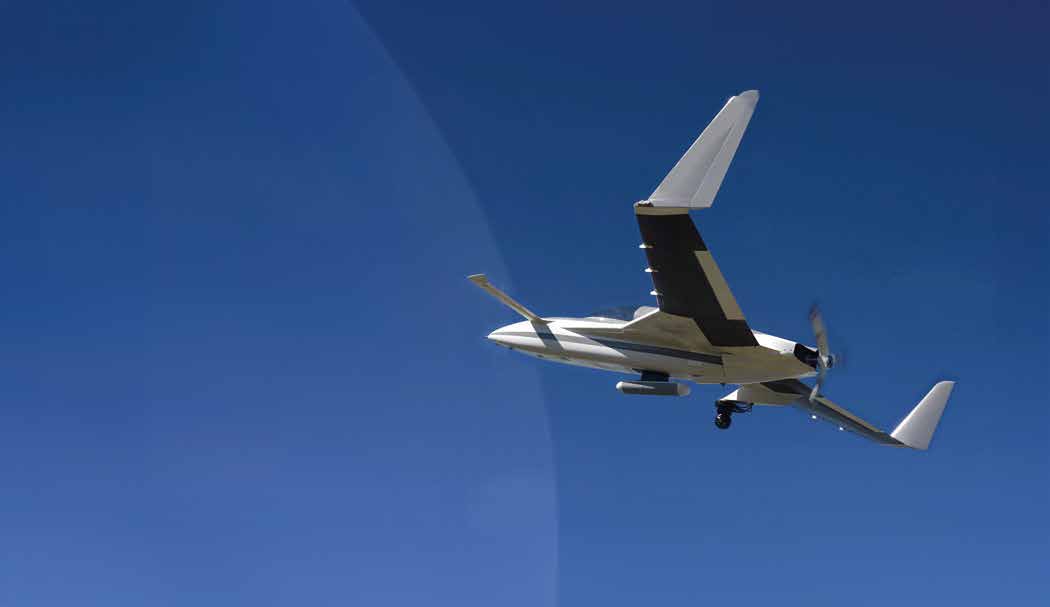
Embention’s Veronte Autopilot 1x is a configurable control system for fixed-wing and other autonomous platforms. Its value in a survey project lies in coordinating vehicle behaviour, sensors and mission equipment within a defined architecture.
Work backwards from the photograph
Specify the required ground detail, image overlap and position information with the survey team. These requirements influence speed, height, camera triggering and the navigation data that must accompany each exposure. The autopilot is one contributor to this chain; it does not determine the final survey accuracy by itself.
Consider an illustrative aircraft travelling at 25 m/s. A 20 ms uncertainty between the recorded position and the actual exposure corresponds to 0.5 m of travel. That does not directly predict the final mapping error, because processing and other measurements also matter. It does show why timing deserves an explicit requirement.
Ask whether the payload needs a trigger command, exposure acknowledgement, timestamp or continuous navigation stream. These are different interfaces, and recording the command time is not necessarily the same as recording the exposure time.
Use configurable flight control to support the mission
The reviewed Veronte 1x 4.12 product documentation describes programmable flight phases, automations, sensor fusion and interfaces for cameras and other peripherals. This gives an integration team ways to coordinate cruise, turns, take-off, landing and payload operation.
For a survey, useful questions include when acquisition should start, what happens during a turn and how an interrupted line is identified. A camera should not quietly continue generating apparently valid survey images while the aircraft is outside the intended acquisition conditions.
Define the control surfaces, propulsion interface, air-data installation and navigation equipment alongside the payload. A fixed-wing aircraft’s behaviour depends on the airframe and control configuration, so a successful installation on another aircraft is a reference rather than a transferable tuning result.
Keep flight success and data success visible
Create separate acceptance criteria for the aircraft and the survey chain. The flight-control checks may address tracking, phase transitions and defined failure responses. The payload checks should establish that exposures, timestamps, navigation records and file identifiers remain associated correctly.
A useful ground exercise is to trigger the intended camera and follow one acquisition event through to the stored record. This can reveal an interface or naming problem before the cost of a flight test. Simulation can then exercise the mission logic, followed by controlled platform testing under the project’s authorised procedures.
Retain the hardware, firmware, configuration and payload baseline with each result. Changing the camera or its firmware can affect the acquisition chain even when the autopilot remains untouched.
UK Supply & Technical Enquiries
Torquety represents Embention in the United Kingdom and imports, distributes and sells its avionics hardware. For a fixed-wing survey enquiry, provide the airframe, mass range, propulsion, control surfaces, camera, timing requirements, navigation needs and intended communications.
Ask Torquety to scope a Veronte survey-aircraft configuration, including any manufacturer integration support. The useful purchasing outcome is a flight-control system selected around the data you need to bring home, with clear responsibilities for every part of that result.