A research aircraft is valuable when one experiment teaches the team something it can trust. That becomes difficult if the airframe, control settings, software and logging configuration all change together. A configurable flight controller should make experimentation manageable, while preserving enough information to explain each result.
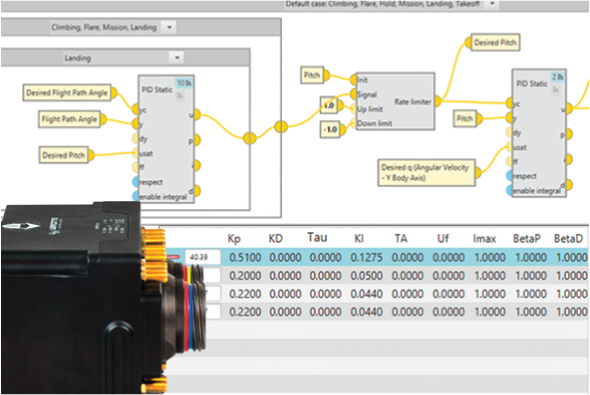
Embention’s Veronte software tools support configuration, operation, connection and data workflows around its avionics. For a research platform, their practical value comes from organising those activities into a repeatable engineering process.
Define the experiment before changing the configuration
Start with the question the test should answer. It might concern a new sensor, a control-law adjustment, a payload interaction or a change in aircraft dynamics. Identify the variable being changed and the measurements needed to judge the result.
An illustrative test of a new airspeed input should record the relevant sensor data and control response, together with the conditions that make the comparison meaningful. Changing the propulsion system at the same time may make the result difficult to interpret, even if the flight succeeds.
This is where configuration discipline saves time. The objective is not paperwork for its own sake; it is the ability to explain why one trial behaved differently from another.
Give each Veronte tool a clear role
PDI Builder is used for configuring the autopilot’s programmable behaviour and interfaces. Veronte Ops supports operational interaction and mission management. Veronte Link provides connectivity within the software environment, while FDR supports flight-data recording workflows. Updater addresses software-update tasks.
These roles belong to a compatible hardware and software baseline. Check the manuals for the versions selected for the project rather than assuming that instructions for an older release apply unchanged.
Keep an approved reference configuration and a separately identified experimental configuration. Record the purpose of each change, who reviewed it and how it was checked before use. This makes it easier to return to a known state after an unsuccessful trial.
Design the log around the question
More recorded channels do not automatically produce better evidence. Choose variables, sampling requirements and time references that can reveal the expected behaviour. Include relevant commands, measured responses and mode changes so the causal sequence can be reconstructed.
For a sensor integration experiment, recording only the final navigation output may hide whether the issue originated in the sensor, its interface or the estimator configuration. Recording raw or intermediate information where supported can make the result much more useful.
Confirm the recording workflow on the ground. Check file retrieval, units, timestamps and configuration identification before relying on the aircraft to produce a valuable dataset.
Make research support a defined deliverable
Simulation and controlled bench tests can remove basic interface and configuration faults before flight testing. They should be selected around the experiment rather than treated as a single generic checkout for the entire programme.
UK Supply & Technical Enquiries
Torquety represents Embention in the United Kingdom and imports, distributes and sells its avionics hardware. It can include the required Veronte software and manufacturer-delivered support scope in a project enquiry; software tools and engineering services should be identified separately from the imported hardware.
Discuss your UAV research platform with Torquety, including the experiments, interfaces, recording needs and team experience. The right purchase supports a sequence of understandable experiments, with a configuration and evidence trail that survives the next design change.