For a maritime monitoring UAV, the ground station may not stay on the ground—or stay still. A vessel can move while the aircraft is away, antenna orientation can change, and the recovery point may differ from the launch position. These details should shape the avionics architecture before the radio or autopilot is ordered.
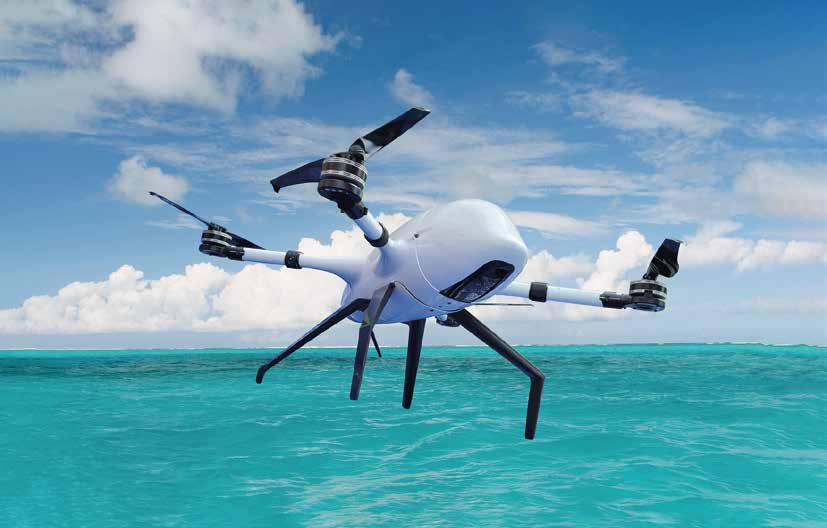
Embention’s Veronte range provides configurable vehicle control and communications interfaces. A maritime project can use those capabilities as building blocks, with the installation, navigation references and recovery logic defined for the actual operation.
Decide which position the aircraft should return to
A stored launch coordinate and the current position of a vessel are different pieces of information. If the operation requires a moving recovery reference, specify how that reference is obtained, transmitted, checked and updated.
An illustrative vessel travelling at 5 m/s moves 300 m in one minute. That simple calculation shows why the age of a position message matters. It does not define an acceptable update rate; the permissible delay depends on the recovery concept and the complete system’s behaviour.
Also define what happens when the moving reference becomes stale or unavailable. “Return home” is not a complete requirement until home, its validity and the permitted response are unambiguous.
Design communications around changing geometry
Identify the airborne and vessel-side antennas, their mounting, coverage and obstructions. A ship’s structure can affect the link differently as the aircraft and vessel change relative position. A tracking antenna may help a directional link, but it introduces its own pointing and data dependencies.
Veronte documentation describes external LOS, cellular and satellite communications arrangements, with capabilities dependent on the selected hardware and configuration. Availability of an interface does not establish coverage or service quality at sea.
Separate the requirements for essential commands, aircraft telemetry and payload imagery. Decide which information must remain live and which can be recorded onboard. Each link-loss condition should have a defined indication and response.
Assess the marine installation beyond the enclosure rating
Salt exposure, moisture, connectors, pressure intakes and antenna installations need system-level attention. The enclosure rating of an autopilot cannot establish the protection of the complete aircraft or its harness.
Review local temperature and condensation as well as direct spray. Access for inspection and replacement also matters when the aircraft is supported from a vessel rather than a workshop.
Choose the control architecture from the required functions and failure responses. Veronte 4x provides multiple internal control cores with an optional external core, while DRx distributes control hardware. Neither arrangement removes common dependencies in power, communications or recovery information simply by adding processors.
Make the maritime assumptions visible in the enquiry
Simulation and controlled testing should exercise stale position information, changing link availability and the relevant recovery states. Keep these scenarios tied to the selected hardware, configuration and operational concept rather than claiming generic maritime readiness.
UK Supply & Technical Enquiries
Torquety represents Embention in the United Kingdom and imports, distributes and sells its avionics hardware. Share the aircraft, vessel integration, payload, communications paths, recovery concept and environmental requirements. Discuss maritime UAV avionics with Torquety to identify the control system, peripherals and manufacturer support needed for the complete monitoring mission.